All posts by Landry Carrera

Music, Love, & Drugs

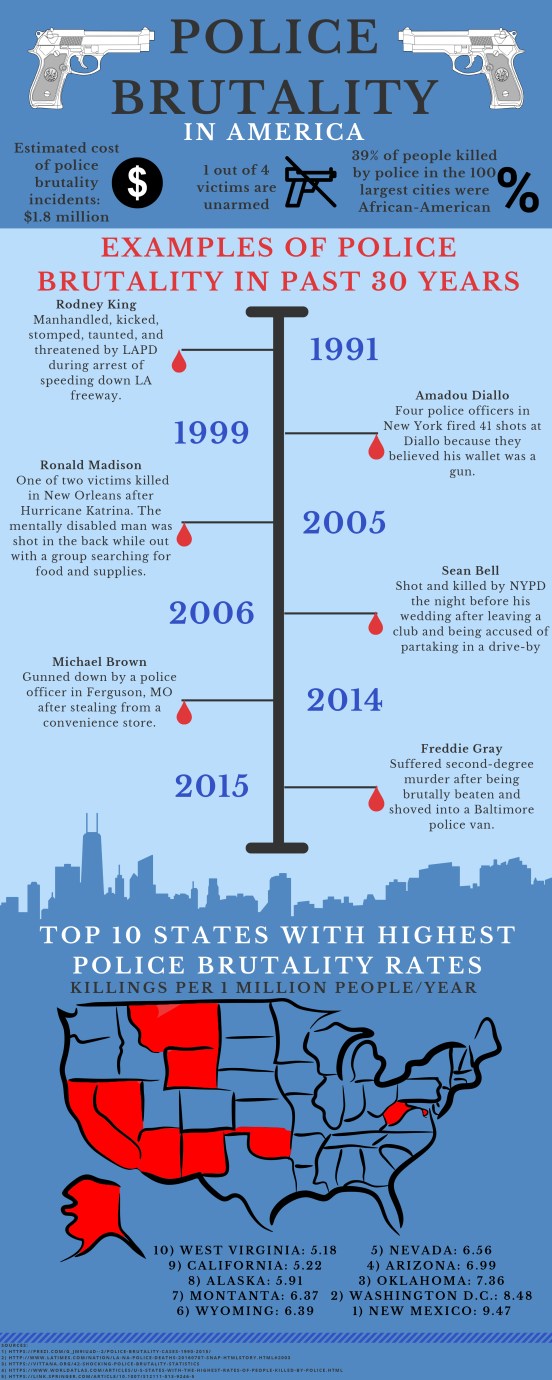
Woodstock 1969. Nicky and Bobby. A young couple who attended the seemingly popular music festival held in the Catskill Mountains of Bethel, New York. This photograph resembles the peace that some find at festivals, but most importantly love. Love with music, love with one another, and in most cases, love with drugs. Music festivals across the world have a strong drug-related stigma attached to them. Growing up as the daughter of two extreme Dead-Head’s, I have overheard thousands of stories of festivals in the late 1900’s. Not only were drugs a large part of the festival go-er’s experience, but also the musicians. A well-known example of this was when lead singer and guitarist of the Grateful Dead, Jerry Garcia, died from accidental overdose in 1995.  His fan base was deeply rooted within the drug scene and that is what made their music so “special and experimental” as they might say.

I chose to focus on this picture because it stood out to me as a shot with hidden significance or a subliminal meaning. Especially now, with the influx of drugs flooding my generation, when someone sees this photo, they think of drugs. I chose to manipulate this image to show the true colors of so many generations perspectives of this image. The ground is covered in tabs of hallucinogens and bags of cocaine, while the sky is what one might consider a “trippy” image, all representing what the people laying down are feeling. I chose to put an aura around Nicky and Bobby symbolizing the high they are feeling, that from music, love, and drugs. It is as though you are entering an alternate universe, which signifies the feeling of the experience Woodstock might give.

Photos used:
https://www.smithsonianmag.com/arts-culture/a-woodstock-moment-40-years-later-33569550/

Police Brutality in America

After living in Baltimore City for the majority of my life, I am sad to say that police brutality has become very familiar to me. I moved to California months before the beating and death of Freddie Gray, which happened just miles from my home. My city was deeply affected by the riots that followed the incident. This assignment sparked my interest to take on police brutality as my topic, as I would like to inform people of the severity of the issue.

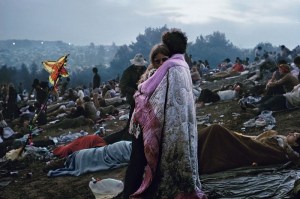
In my infographic, I introduced the topic with 3 of the most important statistics my opinion. These included the cost of the damage law enforcement officers have done, which implies the affect it had on families and personal lives, the idea that majority of people are innocent in these stories, and the racial bias that comes along with police brutality. I chose to lay out a storyline of incidents that have occurred in the past 30 years because it is imperative for people to know this is not a recent problem, but it has been going on for many years. I gave a quick background on each scenario, but not without the important, gruesome details of the events at hand. For the next section, I led with the top 10 states with highest brutality ratesby coloring in states with the use of Adobe Photoshop. This gives the reader a visual of who is being affected most and where. I chose the color scheme red, white, and blue to signify law enforcement colors as well as red blood drops on the timeline to incorporate a sense of pathos to the reader. I did this to show that this is an extremely difficult topic that has much more meaning than a set of numbers.

Additional sources used:

http://www.pewsocialtrends.org/2017/01/11/police-views-public-views/

https://link.springer.com/article/10.1007/s12111-013-9246-5

Freedom of Speech Vox Pop

Since the most recent presidential election, our right to freedom of speech has been exhausted by the variety of opinions people in America hold. The discrepancy in opinions are most common regarding equality, religion, race, gun control, women’s rights, political agendas and so much more. Through the acts of peaceful protests, rallies, and even violent riots, American citizens attempt to advance their positions using their first amendment right. For my DIY #3, I chose to explore freedom of speech within the boundaries of the USC community in order to acquire opinions and subsequently raise awareness on how we, as Trojans, can use productive and respectful speech to change the course of today’s society.

I found it necessary to introduce my vox pop with an attention grabbing, emotional recording of a protest chant I found in a youtube clip. In doing so, free speech and democracy, two of America’s most defining traits, are immediately engrained into the listener’s mind. The young girl fighting for her beliefs evokes emotion in the listener, and pushes one to exercise their own freedom of speech. Prior to my interviews, I researched freedom of speech on college campuses across the United States and gained an understanding of student’s opinions of this topic, and what universities are doing to stop the negative spread of information. For example, I found that over 350 colleges are taking action against hate speech on their campuses, as mentioned in an article from the Freedom Forum Institute. Fortunately, as received from a nationwide pollon student free speech on campus, 87% of students state that they approve of their campus’s job of promoting free speech in the classroom and around the school. While these are favorable statistics, I felt it was necessary to interview students and staff in order to gauge sentiment on USC’s treatment and promotion of free speech. USC is a particularly interesting environment to interview students and staff because city-wide and student lead protests are common around campus; after the 2016 presidential election, students lead anti-Trump protests, and the Downtown Los Angeles marches ended up spilling onto campus.

As we know, our country is filled with varied beliefs on freedom of speech. Furthermore, the University of Southern California has an extremely diverse student population thus leading me to believe that I would be exposed to these different beliefs while interviewing. Throughout my interview process, I spoke to a wide variety of people in the Trojan Family from different walks of life. I spoke to one business major student, one accounting major student, one communications major student, one security guard, and one member of the Greek community. Their differing backgrounds set up the framework for their supported and educated opinions. The different responses I received proved my preconceived notion of varying opinions. Nevertheless, my greatest takeaway from studying this topic is that in order for one to protect their freedom of speech and expression, people must become tolerant and respectful of other opinions. Without this open mindedness, people will become unwilling to voice their opinions or rather revert to hate speech or violence in order to get their point across.

References:

https://www.youtube.com/watch?v=-2RlIwpq7co

https://www.freedomforuminstitute.org/first-amendment-center/topics/freedom-of-speech-2/free-speech-on-public-college-campuses-overview/hate-speech-campus-speech-codes/

https://www.dropbox.com/s/sfmpoeytvqc3cl2/NATL%20College%2010-25-15%20Presentation.pdf?dl=0

https://www.usatoday.com/story/news/2015/11/12/missouri-yale-campus-speech-first-amendment/75600646/

Who Are We Anyway?

What defines a human being as an individual? What makes a person different from any other being walking down the street? It is our qualities and backgrounds that make each person unique and in some way different from others. Every human being on this earth is made up of thousands of characteristics, traits, and attributes. The way we build relationships and connect with one another is based on our similarities in culture, religion, class, age, sexuality and so much more.
From the time I was born, I have been growing my identity each and every day. To start with the basics, I will start with some background. I am a 20 year old, white, heterosexual female. Growing up in Baltimore, Maryland and then moving to California in my later teenage years, I have lived in the middle-upper class the majority of my life. I was raised going to a church every Sunday at the Catholic elementary/middle school in where I attended grades K-12. I then attended a small, private all girls high school for two years before moving to Palos Verdes, California where I transferred to a large public co-ed high school. I am very fortunate to say I have no disabilities nor lasting health conditions. I am majority Italian and Cuban with a touch of French and Hungarian.

In my life, the facets of my identity that play the biggest role are my race, gender, and class. As a white person living in both Baltimore and Los Angeles, two extremely diverse cities, I have experienced white privilege in many different shapes and forms. However, as a female in 2018, I have also faced discrimination in the workplace, on the athletic field, and in school life as well. Finally, I have been privileged to have a financially stable family that is able to provide me with an extraordinary education and life. To me, the most important of these three facets is the fact that I am female. I have two older brothers, both whom have taught me an incredible amount about life in general. They have taught me to be a strong, powerful, and independent woman no matter what the circumstance. I will never let a man overpower me in an situation, nor tell me I am not worthy enough because I am a woman.

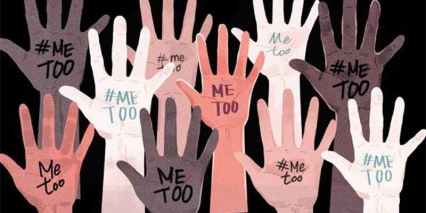
I believe almost all parts of my identity are portrayed in the media. We have all heard of the Oscars So White scandal and if you haven’t, you can find more about it here. Entertainment and news media industries are notably biased towards reporting on and filming white people more than any other race. After films Creedand Straight Outta Comptonwere disregarded, people protested with the hashtag #OscarsSoWhite to bring attention to the fact that other races were not being recognized in the media. There is an influx of white representation in the media and people are putting their foot down. Another media representation that I can identify with is the portrayal of females as sexual figures. I am in a sorority at USC, which is one of the most sexualized groups of people, especially in media. I think this is one of the most important aspects of entertainment that must be changed. This teaches boys and men the way society is expected to treat women, which has led to the advancement of sexual assault and harassment cases across the country.

Smells Fishy

Part 1:

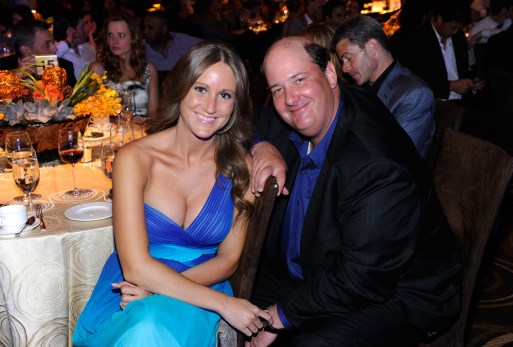
This image seems like a nice picture of who we all know as Kevin from the Office, or Brian Baumgartner, and his wife, Celeste Ackleson. On my normal Saturday afternoon scrolling through Instagram, I came across this picture on a meme page accompanied with the caption, “This is Kevin from The Office and his wife. Now I’m not saying she’s a gold digger, but she’s literally holding him by the Rolex.” After a good laugh, I thought to myself, no way this can be real. Now I am aware that the caption had such a big influence on my immediate perception of it. If I had seen this picture alone, I probably would not have thought twice about it, but because of it’s hilarious nature, it just seemed so bazaar. As I sat down to write this blog, I thought back on this picture and said to myself, Is it real???

Since this image came from a famous meme page with millions of followers that alters photos to include captions, I had a hard time doing a reverse image search. Instead, what I did was attempt to find the photo on Google by searching “Brian Baumgartner and wife.” I found only one matching photo on this link: https://heightline.com/brian-baumgartner-wife-weight-loss/. Underneath this photo contained a link titled “image source.” This gave immediate direction to the source (Love Lace Media) that supplied this article with the photo. I decided to dig a little deeper and reach out to the team at Love Lace Media, in order to track down the original photo. Unfortunately, they did not respond in time for me to put it into an EXIF reader. This was as far as I could get into decoding this picture.

Since this image only had one matching result on my Google search, it didn’t seem to be very popular. In that case, I am almost certain that the image was not altered, and was in fact, originally taken and published by Love Lace Media without any alteration.


Part 2:

This article was provided by the New York Times on September 2nd, 2018. It was written by NY Times White House Correspondent, Katie Rogers. While this article is an informative piece about Meghan McCain and her relationship with her father,  John McCain, it is rather biased. It is very clear that Rogers admires Ms. McCain and her determined mindset. Rogers’s use of quotes as evidence throughout the article is notable. From family friends of Ms. McCain, to Meghan herself, Rogers picks out very positive and strong quotes to argue her point. I conclude that the logic behind this article is to persuade the reader into becoming fond of Meghan McCain because she spoke very highly of John’s daughter and pointed out very credible things she has done/stands for. I commend Rogers for her use of pathos throughout the article in her creative writing. She brings her points home by evoking strong emotions, especially in the hook of the article when she states, “But as Ms. McCain shared one of her father’s dying directives — “Show them how tough you are” — her voice stopped wavering. The warrior’s daughter steeled herself, drew her eyes up and stepped into battle.” Lastly, since this article is so clearly biased, I think it leaves out important parts of Ms. McCain’s life. From what we have read, she seems to only have done good, but no one is perfect and there must be some faults lying somewhere. This gives the reader a suspicious feeling about the negative side, if there is one.


24 Hours of Nonsense

I always knew this day and age was filled with social media, I mean who doesn’t? Everywhere we turn there is an 8 year old with the newest iPhone or a toddler with an iPad in hand. We may think we have a grasp on how much media we consume, but in reality we have no idea. Technology has become such an integral part of our day to day life, so much that we cannot imagine what it would be like without it. For this assignment, I monitored the amount of media I was intaking over a span of 24 hours. (Here’s the link to my Media Consumption Log). To my surprise, I have come to realize that I subconsciously click the unlock button on my smart phone several times a day in hope of a notification popping up on my screen.

This summer I spent 2 and a half months attending a summer camp in the Sierra National Forest where I was a counselor for children ages 5-16. I had very minimal access to phone and internet, as I was in the middle of the mountains. The camp held very strong values, one of which was the “no technology” policy. They take pride in giving campers and counselors the experience of “real-ationships.” During my first few days at camp I was constantly checking my pockets for my cellphone, but eventually I became accustomed to checking my watch for the time and never feeling the need to look at my phone.

Screen Shot 2018-09-03 at 3.16.26 PM

After a few days back at school this August, I caught myself forgetting my phone when I went places and barely relying on it at all. Since I’ve been back for 2 weeks now, things have changed. I have succumbed back into the 21stcentury lifestyle of having a heavy pocket. After this assignment, what I have become most of aware of is not how much time I spend on my devices, but rather what I am doing on them. It has become evident to me that the vast majority of my media intake is entertainment rather than education. My media consumption log is made up of mostly Instagram, Snapchat, Facebook or text message loggings. As I was waited in line for Starbucks I checked my phone a whopping 14 times in a matter of less than 5 minutes. I do this because apps like Instagram keep me updated on what everyone did over the past week/weekend, Snapchat keeps me in touch with my closest friends on an hourly basis, and Facebook lets me know what is going on in my sorority. Checking these sites become a force of habit.  I am so concerned with what is going on in the social scene I forget the important things around me.

The more I thought about it, I noticed I rarely check news sites. Yes, I get emails from the Skimm every weekday morning and catch glimpses of article titles from CNN, but is that enough? According to my log, when I am bored I aimlessly scroll through social media only to load and re-load a page that probably won’t refresh in a matter of minutes instead of refreshing a news app that can give me information I can use in the real world.